If you’re a small business owner in the UK wondering why you’re not showing up when people search for services like yours nearby, local SEO might be the missing piece.
Local SEO services help your business appear in Google’s local search results — the map pack, “near me” searches, and location-specific queries. For service businesses, trades, and local professionals, this visibility directly translates to enquiries and phone calls.
In this guide, I’ll walk you through exactly what are local SEO services, what they actually achieve, and how to know if they’re working. No jargon, no fluff — just practical information based on what I’ve learned building and optimising local visibility for businesses like yours.
Table of Contents
What Local SEO Actually Helps With
Before diving into the services themselves, let’s clarify what local SEO solves.
Local SEO makes your business visible when potential customers search for what you offer in your area. Think “plumber in Bristol” or “solicitor near me” — searches where location matters.
Here’s what improved local SEO typically delivers:
- More visibility in Google’s map results (the three listings that appear at the top)
- Higher rankings for “[your service] + [your location]” searches
- Increased website traffic from people in your service area
- More phone calls and enquiry form submissions
- Better trust signals (reviews, complete business information, professional presence)
If you’re barely visible in local searches, struggling to compete with larger competitors, or getting website visitors but no enquiries, local SEO services address exactly these problems.
Here’s everything you need to know on how to improve your local seo today.
What’s Usually Broken
Most small business owners I speak with have similar issues. They’re not doing anything wrong exactly — they just don’t know what needs doing.
Common problems include:
Google Business Profile issues The profile is either unclaimed, incomplete, or hasn’t been updated since it was set up. Categories are wrong. Business hours are outdated. No photos, no posts, no proper description.
Basic or outdated website The site might look fine, but it’s not built to rank locally. Missing service pages. No location-specific content. Poor structure. Slow loading times.
No review strategy Either no reviews at all, or a handful of old ones. No system for asking satisfied customers to leave feedback, which means competitors with active review generation pull ahead.
Inconsistent business information Your business name, address, and phone number (NAP) differ across directories, which confuses Google and dilutes your authority.
Zero local content No pages targeting specific locations or services. Nothing that helps Google understand where you operate and what you do there.
These aren’t expensive problems to fix, but they need addressing systematically. That’s where local SEO services come in.
What Local SEO Services Actually Include
Proper local SEO isn’t one task you tick off — it’s a combination of setup work and ongoing optimisation. Here’s what a complete service should cover.
Google Business Profile Optimisation
Your Google Business Profile (formerly Google My Business) is the foundation of local visibility. Optimisation includes:
- Claiming and verifying your profile if you haven’t already
- Selecting the most accurate primary and secondary categories
- Writing a keyword-rich business description that explains what you do and where
- Adding high-quality photos of your work, premises, or team
- Setting up services, products, and attributes
- Posting regular updates (offers, news, helpful content)
- Responding to reviews professionally
- Adding FAQs that address common customer questions
A well-optimised profile dramatically increases your chances of appearing in the map pack and Google’s local results.
Local Service Pages
Generic “About” and “Services” pages don’t cut it for local SEO. You need dedicated pages for each service you offer, ideally tailored to specific locations if you serve multiple areas.
For example, if you’re a plumber covering Reading and Bracknell, you’d create:
- Emergency Plumbing Services in Reading
- Boiler Repairs in Bracknell
- Bathroom Installations in Reading
Each page should include relevant local information, what you offer, why someone should choose you, and a clear way to get in touch. These pages help Google understand your service area and improve rankings for location + service searches.
Citations and NAP Management
Citations are online mentions of your business name, address, and phone number. They appear on directories like Yell, Bing Places, Apple Maps, and industry-specific sites.
Local SEO services include:
- Building citations on relevant, trustworthy directories
- Ensuring NAP consistency across all platforms
- Correcting or removing incorrect listings
- Monitoring citations over time to catch errors
Consistent, accurate citations reinforce your location and legitimacy to search engines. Inconsistent information does the opposite.
Reviews and Reputation Management
Reviews directly impact local rankings and customer trust. Local SEO services help you:
- Create a system for requesting reviews from happy customers
- Respond thoughtfully to all reviews (positive and negative)
- Address problems quickly and professionally
- Monitor review activity across Google and other platforms
You can’t fake or buy reviews — Google’s wise to that. But you can make it easy for satisfied customers to leave feedback, and that’s what matters.
Internal Linking and Site Structure
Your website’s internal linking tells Google which pages are important and how they relate to each other. For local SEO, this means:
- Linking service pages to location pages
- Connecting blog content to relevant service pages
- Creating a clear, logical site structure
- Using descriptive anchor text that includes location and service keywords
Strong internal linking helps search engines understand your site and passes authority to the pages you want to rank.
Local Schema Markup
Schema is code that helps search engines understand your business information — your address, phone number, opening hours, services, and reviews.
Adding local business schema (and other relevant structured data) increases the chances of appearing in rich results and provides Google with clear signals about your location and offerings.
Most business owners don’t need to understand how schema works — just that it should be implemented correctly on your site.
A Real Example: What Adding a Local Page Did for My Own Site
When I launched Ready Rank, I started with a standard services site. Traffic was slow, impressions were low, and I wasn’t ranking for anything meaningful locally.
Then I added a dedicated “Local SEO Eastbourne” page — a proper service page targeting my local area with helpful, specific content.
Within a few days, impressions in Google Search Console jumped noticeably. Not a massive spike overnight, but a clear, sustained increase. No backlinks, no ads, no tricks. Just one well-optimised local page showing Google exactly where I operate and what I offer there.
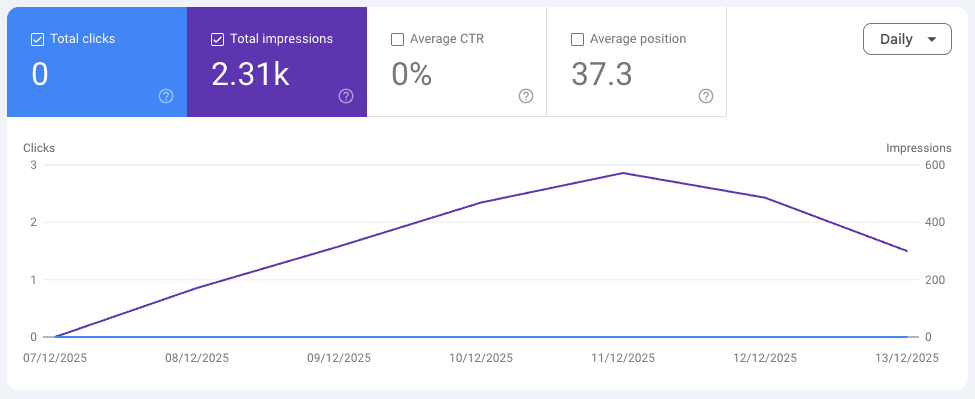
If one local page could make that difference for my site, imagine what a full set of optimised local content could do for an established business with existing authority.
It reinforced something important: local SEO works when you give Google clear, relevant signals about your location and services. Most small businesses just aren’t doing that yet.
How Long Does Local SEO Take to Work?
This is always the first question, and the honest answer is: it depends.
That said, here’s a realistic timeline based on what the industry generally sees:
2–4 weeks: Early signs like increased impressions and occasional map pack appearances. Your Google Business Profile might start showing up more often.
1–3 months: Movement in local rankings. You’ll start appearing on page one for less competitive local searches. Website traffic from local queries increases.
3–6 months: Consistent enquiries and calls from local search. Your map pack visibility stabilises. Rankings improve for more competitive terms.
6–12 months: Compounding results. Reviews accumulate, content builds authority, and you’re ranking well across a range of local searches.
If you’re in a highly competitive area (e.g., personal injury solicitors in London), expect the longer end of this timeline. If you’re a tradesperson in a smaller town with weak local competition, you might see results faster.
The key point: local SEO compounds over time. It’s not a quick fix, but the results build and last.
What Ongoing Local SEO Actually Looks Like
Local SEO isn’t a one-time setup. The businesses that dominate local search maintain their presence consistently.
Here’s what effective ongoing local SEO includes:
Regular review generation Continually asking happy customers for reviews. Responding promptly to new feedback. Monitoring your reputation across platforms.
Google Business Profile updates Posting offers, sharing news, uploading fresh photos, updating FAQs, and keeping business information current.
New content and local pages Publishing blog posts that answer customer questions. Adding service pages for new offerings or locations. Refreshing outdated content.
Citation management Checking that your business information stays consistent across directories. Correcting errors when platforms merge, change, or get updated.
Monitoring and adjusting Tracking rankings, traffic, and enquiries. Identifying what’s working and where there’s room to improve.
Ongoing local SEO keeps you visible, competitive, and responsive to changes in search behaviour and algorithm updates.
How Much Do Local SEO Services Cost in the UK?
Pricing varies, but here’s a rough guide to what you should expect:
One-off local SEO setup: £300–£800 This includes Google Business Profile optimisation, citation building, local schema setup, and foundational on-page SEO for key service and location pages.
Ongoing local SEO management: £150–£500/month This covers review management, GBP updates, content creation, citation monitoring, and performance tracking.
Budget services (£50–£100/month): Usually automated tools with little personalisation. Often delivers minimal impact because there’s no strategic input or ongoing refinement.
You get what you pay for. Cheap local SEO is often checklist-only work with no follow-through, leaving you with a half-optimised profile and no real results.
Good local SEO requires time, expertise, and attention. If someone’s charging £49/month, ask yourself how much actual work they can realistically do for that price.
What Local SEO Is NOT
Before you start, it’s worth knowing what local SEO won’t do.
It’s not instant. You won’t rank #1 overnight. Local SEO takes weeks and months to build momentum. Anyone promising immediate results is either lying or using tactics that’ll get you penalised.
It’s not guaranteed rankings. No one can guarantee you’ll rank first for every keyword. Too many variables — competition, Google’s algorithm, your site’s history. What I can do is improve your visibility, relevance, and authority so you rank as well as possible.
It’s not a one-time task. Local SEO requires maintenance. Your competitors are actively working on their visibility. If you stop, you’ll slide backwards.
Understanding these limitations upfront means we can work together with realistic expectations and a proper long-term strategy.
Summary: What Are Local SEO Services?
Local SEO services help your business appear in Google’s local search results — map packs, “near me” searches, and location-specific queries.
A complete local SEO service includes:
- Google Business Profile optimisation
- Local service and location pages
- Citation building and NAP management
- Review generation and reputation management
- Internal linking and site structure improvements
- Local schema markup
Expect early signs within 2–4 weeks, meaningful movement in 1–3 months, and consistent results after 3–6 months.
Ongoing work — reviews, GBP updates, fresh content, and citation monitoring — keeps you competitive long-term.
If you’re ready to improve your local visibility, I offer a free local SEO audit that’ll show you exactly where you stand and what needs fixing. No obligation, no sales pitch — just an honest assessment of your local presence.
Get your free local SEO audit or get in touch to discuss how local SEO can work for your business.
Frequently Asked Questions

About the Author
Steve Cleverdon is a web designer and local SEO specialist who helps small UK businesses build better websites and improve their visibility on Google. He shares straightforward, practical advice on web design, GBP optimisation, and simple SEO tactics that work.
This article may contain affiliate links. If you buy through them, I may earn a commission at no extra cost to you. Learn more here